The Video Prompt · Seedance 2.0
scroll to read all ↓
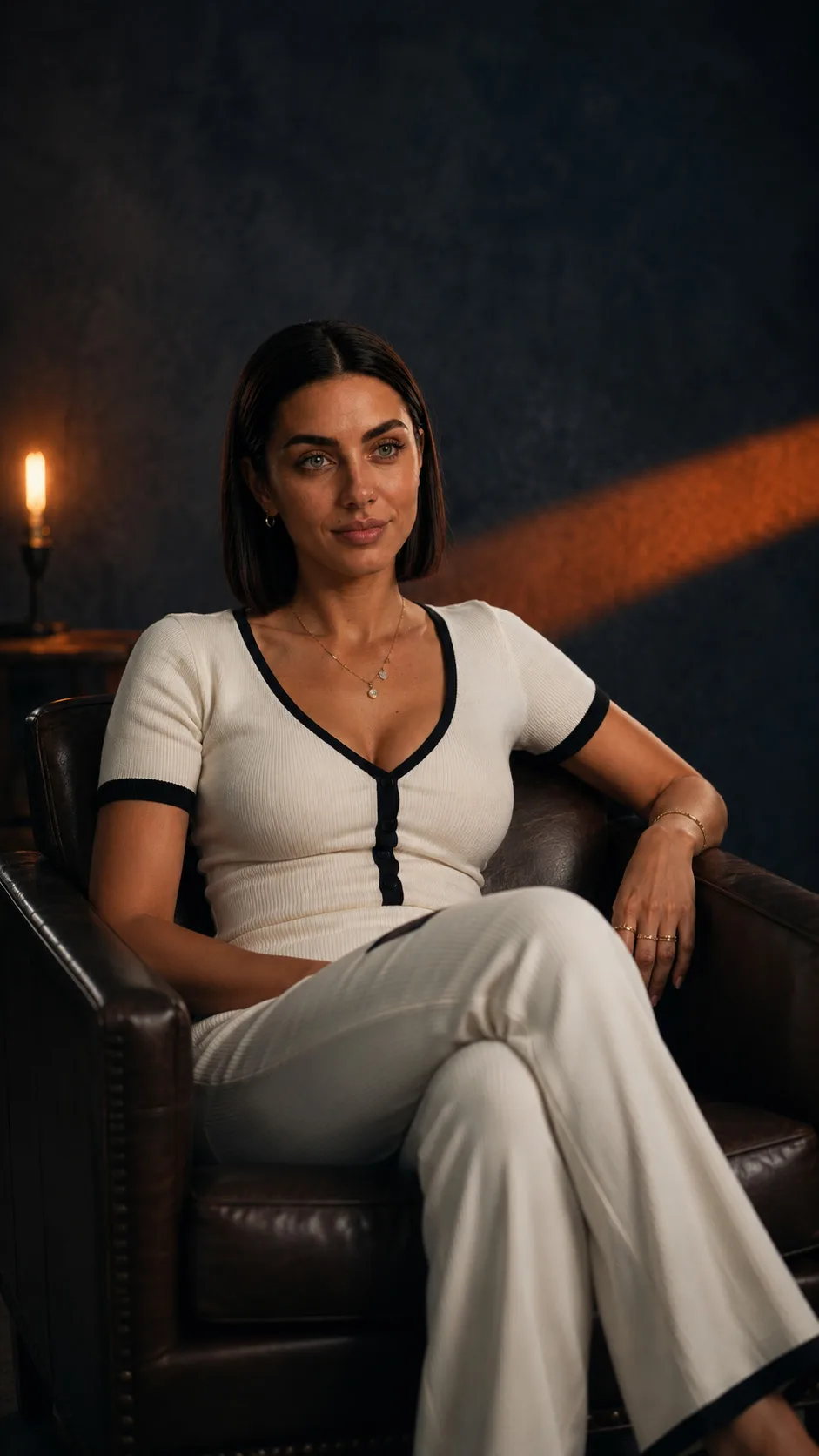
Use @image1 as the single visual reference for the main subject, the subject’s exact identity, facial features, hairstyle, body proportions, wardrobe, accessories, chair, interview set, lighting, framing, and color grade.
Do not redesign, reinterpret, feminize, masculinize, simplify, or replace the outfit. Copy the complete outfit visible in @image1, including its colors, fabric, fit, layers, accessories, jewelry, footwear if visible, and styling details. The outfit must remain identical and continuous in every shot.
If a voice reference is provided, use it only for the main subject. Do not use the main subject’s voice for the interviewer.
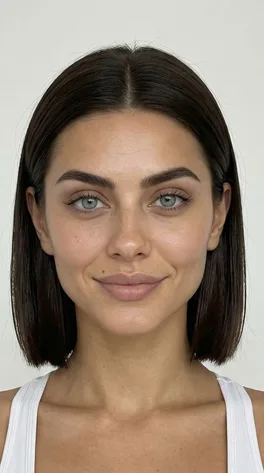
Create a polished 15-second cinematic documentary interview opening with a premium streaming-documentary visual language. Preserve the main subject’s identity, face, skin tone, eye color, hairstyle, clothing, accessories, and realistic body proportions consistently throughout every shot.
SET AND VISUAL CONTINUITY
Reconstruct the interview environment visible in @image1.
Preserve all recognizable set details, including:
- the textured interview background
- the practical background lighting
- any colored stripe, painted element, or light pattern visible in the image
- the chair or armchair
- the floor and surrounding atmosphere
- the original lighting direction
- the original contrast and color palette
- the cinematic depth of field
Do not introduce a new set design that conflicts with @image1.
Any colored stripe or background element visible in @image1 should retain the same matte, atmospheric character. It must not turn into neon, a laser, or an excessively bright glowing beam unless it already looks that way in the reference.
The chair must remain identical in design, position, material, color, and scale throughout the video.
Although the main subject is already seated in @image1, begin the video by reconstructing the same composition with the chair empty. Create a natural empty-set version by temporarily removing the subject while preserving the chair, wall, lighting, shadows, and all background details. The main subject then enters and sits down.
CHARACTERS
Main subject:
The main subject is the person shown in @image1.
Preserve the exact:
- identity
- facial structure
- hairstyle
- hair color
- eye color
- skin tone
- body proportions
- clothing
- accessories
- makeup or grooming
- overall presentation
Do not change the subject’s gender presentation or outfit.
The main subject begins slightly uncertain and self-conscious because the recording is about to begin. The behavior should feel subtle, believable, and human, never exaggerated. As the scene progresses, the subject becomes more relaxed, amused, and comfortable.
Interviewer:
The interviewer is a separate person, approximately 50 years old.
The interviewer has:
- naturally gray or silver-gray hair
- neatly styled shoulder-length hair or hair loosely tied back
- thin-framed reading glasses
- a mature, intelligent, calm appearance
- understated professional grooming
- neutral professional clothing in charcoal, navy, black, brown, or another muted tone
- composed and encouraging body language
The interviewer’s clothing should be professional and visually understated. Do not make the interviewer’s wardrobe match or compete with the main subject’s outfit.
The interviewer sits opposite the main subject in a wooden director’s chair and holds a notebook and pen. The interviewer occasionally looks down at the notes and then back toward the main subject.
The interviewer’s voice must sound clearly different from the main subject’s voice: mature, calm, articulate, warm, and gently authoritative.
STRICT DIALOGUE ASSIGNMENT
Only the main subject says:
“Which camera should I look at?”
Only the interviewer says:
“Mia Maldini, episode one.”
Only the main subject says:
“Alright… let´s do this.”
Do not swap the voices.
Do not overlap the dialogue.
Each speaker must visibly and audibly deliver only the assigned line.
Use accurate English lip synchronization, clear speaker separation, natural breathing, realistic pauses, and believable conversational timing.
TIMED EDITED SEQUENCE
0.0–2.8 seconds — Empty chair opener with slow zoom-in
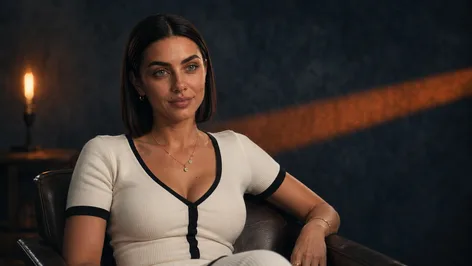
Begin with an opening shot inspired by the first reference frame: the chair is empty, the textured wall is visible, the practical lamp glows on the left, and the colored stripe extends across the background. The framing should be slightly wider and slightly different angle from the main seated shot. Keep the composition elegant and cinematic.
Apply a slow, subtle zoom-in or slow push-in throughout this opening. The movement should be gentle and refined, not dramatic.
The main subject enters the frame naturally from the side, approaches the chair, and sits down in a calm, realistic way. The motion should feel casual and believable, like someone preparing for an interview, not like a staged fashion entrance.
As soon as the subject settles into the chair, cut to the seated hero angle.
2.8–5.8 seconds — Main seated interview angle, static camera
Cut to the seated interview framing matching @image1. This should be a slightly tighter, cleaner hero shot with the main subject already seated. The camera is now static and does not continue zooming. The subject sits in the same position, same chair, same outfit, same lighting, and same overall composition as in @image1.
This is the primary documentary interview angle.
The subject looks mildly unsure and gently glances left and right with small, natural head and eye movements, as if checking which camera or crew direction is correct. The movements should be soft and realistic, never exaggerated or jerky.
The main subject says:
“Which camera should I look at?”
The delivery is friendly, slightly unsure, and natural. The subject should not stare into one fixed lens for the entire line. Their attention should softly shift left and right while asking the question. After the question, someone off camera silently indicates the correct direction, and the subject gives a small understanding nod.
Keep this shot static and steady after the cut.
5.8–7.8 seconds — Tight top-down portrait
Cut to a controlled top-down shot focused only on the main subject and the chair.
Do not reveal the entire studio, lighting setup, crew, or surrounding room.
The frame should contain the main subject, the chair, and only a small amount of floor around them.
The main subject must not look upward into the overhead camera.
The subject continues looking toward the interviewer’s direction, forward and slightly to one side.
The subject settles into the chair and performs a small, polite throat-clear gesture.
One hand briefly rises near the mouth while the subject lightly clears their throat.
This is not a real cough. It is a restrained conversational gesture made by someone preparing to begin a formal interview.
7.8–10.6 seconds — Behind-the-scenes camera monitor shot
Cut to a cinematic behind-the-scenes angle positioned behind or slightly beside the main cinema camera.
This shot must be described very precisely:
The camera monitor or display screen is the primary point of focus and should be crisp and sharp. On the monitor, the main subject is clearly visible, correctly framed in the seated interview composition, wearing the exact outfit from @image1. The person visible on the monitor must unmistakably be the same main subject.
Behind the monitor, in the real physical space, the main subject is also visible sitting in the chair in the same position, but softly blurred due to shallow depth of field. The real subject in the background should match the person on the display exactly in identity, pose, outfit, and lighting. The focus priority is on the monitor image, while the real seated subject behind it remains softly out of focus.
Also show part of the cinema camera body in the foreground and, if helpful, a small portion of a softbox, light stand, or grip hardware. Reveal only a controlled amount of production equipment. Do not make the scene cluttered.
This shot should feel like a professional documentary behind-the-scenes image: camera display sharp, real subject behind it soft, elegant shallow depth of field, premium cinematic atmosphere.
The main subject waits quietly and maintains the correct eyeline toward the interviewer.
Use a very slight handheld drift or gentle slider movement while keeping the shot polished and stable.
10.6–12.9 seconds — Over-the-shoulder reverse shot toward the interviewer
Cut to an over-the-shoulder reverse shot from behind the main subject.
The subject’s shoulder and the back of the subject’s head appear softly out of focus in the foreground.
The interviewer is in focus across the room.
The interviewer sits in a wooden director’s chair, holding a notebook and pen.
The interviewer is approximately 50 years old, with gray or silver-gray hair and thin-framed reading glasses.
The interviewer briefly looks down at the notebook and then raises their eyes toward the main subject.
CRITICAL REVERSE-ANGLE ENVIRONMENT RULE
The interviewer must not appear against the main subject’s polished hero background.
Do not repeat the same textured wall, colored stripe, practical lamp, or clean portrait composition behind the interviewer.
The reverse angle must reveal the real production room located behind the interview set.
Around and behind the interviewer, show a believable professional studio environment containing:
- one or two cinema cameras
- a camera operator standing near a camera
- lighting stands
- a large softbox
- controlled cables on the floor
- one or two crew members
- equipment cases
- grip equipment
- part of the open studio room
- the rear side or edge of the constructed interview backdrop
The interviewer is seated behind the polished interview setup, inside the working production space.
The reverse angle should feel like a cinematic behind-the-scenes view rather than a matching interview portrait.
Keep the studio organized and professional, not messy.
The interviewer visibly and audibly says:
“Mia Maldini, episode one.”
Only the interviewer speaks this line.
The interviewer’s lips must synchronize accurately.
The main subject remains silent during this sentence.
12.9–15.0 seconds — Return to the main seated shot
Cut back to the previously established main seated interview angle matching @image1.
Do not introduce a new camera angle.
Reuse the same camera direction, lens, lighting, chair position, outfit, and composition established in the earlier seated hero shot.
The main subject reacts with shy, sweet amusement. The expression brightens gently into a soft genuine smile.
The main subject says:
“Alright… let´s do this.”
Only the main subject says this line.
The lip movement must match the words exactly.
Immediately after the sentence, the main subject gives a short, shy, cute, warm laugh. The laugh should feel sweet, a little bashful, and natural, not loud or theatrical. The body language should soften slightly, with a relaxed posture and a charming, modest reaction.
End while the main subject is still smiling naturally.
EDITING AND CAMERA LANGUAGE
Use clean, intentional documentary cuts.
Do not use:
- morphing transitions
- dissolves
- whip pans
- flash transitions
- artificial zoom effects after the opener
- rapid montage editing
- aggressive handheld motion
The unique camera angles are:
1. empty-chair opener with slow zoom-in
2. main seated static hero shot
3. tight top-down portrait
4. behind-the-scenes monitor shot
5. over-the-shoulder reverse shot toward the interviewer
The final reaction reuses angle 2 and does not count as a new angle.
SPATIAL CONTINUITY
Maintain consistent screen direction and logical studio geography:
- the main subject remains positioned in the hero interview set
- the interviewer remains positioned opposite the main subject
- the interviewer sits near the main camera position
- the main subject’s eyeline consistently points toward the interviewer
- the interviewer’s eyeline consistently points toward the subject
- the reverse angle reveals the real room behind the set
- all chairs, cameras, lights, crew members, and equipment remain logically positioned
- the outfit and accessories from @image1 remain unchanged
PERFORMANCE
The main subject begins slightly uncertain but remains intelligent, composed, approachable, and natural.
The emotional progression should feel like:
- natural and slightly tentative while entering and sitting
- mildly unsure while asking which camera to look at
- reassured after receiving guidance
- polite throat-clear before beginning
- attentive during the interviewer’s cue
- shyly amused during the response
- sweet and bashful during the final laugh
Avoid exaggerated confusion, broad gestures, dramatic coughing, artificial laughter, or theatrical reactions.
The interviewer remains calm, professional, mature, encouraging, and attentive.
The interviewer should not dominate the scene or react excessively.
TECHNICAL AND VISUAL STYLE
- total duration: exactly 15 seconds
- horizontal cinematic 16:9 composition
- professional cinema-camera appearance
- controlled shallow depth of field
- soft highlight rolloff
- subtle fine film grain
- realistic skin tones
- lighting and color palette inherited from @image1
- accurate identity continuity
- accurate outfit continuity
- realistic hands and body movement
- clear dialogue
- subtle natural room tone
- no music
- premium streaming-documentary atmosphere